
How to Prevent Asphalt Potholes from Forming
Table of Contents
What Causes Potholes in Asphalt
Water Infiltration and Poor Drainage
Freeze-Thaw Cycles and Temperature Swings
Traffic Loads and Repeated Vehicle Impact
Early Detection: Inspecting for Cracks and Surface Damage
How to Prioritize Cracks and Warning Signs
Asphalt Crack Sealing to Stop Water Penetration
Sealant Types and Application Methods
Asphalt Sealcoating as a Preventive Barrier
What Sealcoating Actually Does, and Does Not Do
Timing, Coverage, and Cost Expectations
The Lifecycle Trade-Off
Surface-Specific Notes
Asphalt Drainage Solutions to Eliminate Standing Water
Drainage Troubleshooting Checklist
Seasonal Prevention Schedule for Driveways and Parking Lots
How to Read This Schedule
Spring (March-May): Damage Assessment and Sealing
Summer (June-August): Coating and Monitoring
Fall (September-November): The Critical Window
Winter (December-February): Protect and Document
Surface-Specific Priority Order
A Simple Tracking Method
When to Call a Professional vs. DIY Maintenance
Frequently Asked Questions
Last Updated: October 14, 2026
What Causes Potholes in Asphalt
Potholes form when water gets under asphalt and weakens the layers below, which is why the best way to prevent asphalt potholes is understanding this process.
Water Infiltration and Poor Drainage
Water is the enemy of asphalt pavement. Rain should run off quickly; if it pools, trouble begins.
Standing water seeps through cracks into the base layer, weakening the foundation until it can no longer support vehicle weight.
Poor drainage makes this worse: if your lot slopes the wrong way or lacks grading, water collects in low spots, and one rainy week can do serious damage.
What to watch for:
Dark wet spots that stay damp for hours after rain
Water pooling in the same areas every time it rains
Grass growing in cracks (a sign moisture is trapped below)
Freeze-Thaw Cycles and Temperature Swings
This freeze-thaw cycle repeats dozens of times each winter, so by spring small cracks become major problems.
Temperature swings also cause surface cracking: asphalt expands in heat and contracts in cold, and repeated stress leads to alligator cracking (interconnected cracks that look like alligator skin).
Traffic Loads and Repeated Vehicle Impact
Every vehicle that drives over your asphalt creates stress. One car is fine; hundreds per day add up.
If the base is weak from water damage, the asphalt flexes more than it should and those tiny failures link into cracks.
Traffic damage accelerates once cracks start: water enters, the base weakens, and the next vehicle can punch right through, creating a pothole.
Early Detection: Inspecting for Cracks and Surface Damage
Catching problems early saves money: a small crack costs less to seal than a pothole costs to repair properly.

Walk your driveway or parking lot monthly and look for these signs:
Early warning signs:
Thin cracks less than 1/8 inch wide
Cracks that branch out like a tree (alligator cracking)
Edges of pavement that are crumbling or separating
How to Prioritize Cracks and Warning Signs
Not all cracks need immediate attention. Some are cosmetic. Others signal serious underlying problems.
Cracks to seal right away:
Any crack wider than 1/4 inch (water can enter easily)
Cracks near the edges of the pavement (water runs off here)
Cracks in low spots where water pools
Cracks that are less urgent:
Hairline cracks (less than 1/8 inch) in the middle of the pavement
Surface cracks with no water pooling nearby
Isolated cracks that aren't spreading
Check cracks monthly during wet seasons. If one grows 1/4 inch or more in a month, seal it within two weeks, the longer you wait, the deeper water penetrates.
Asphalt Crack Sealing to Stop Water Penetration
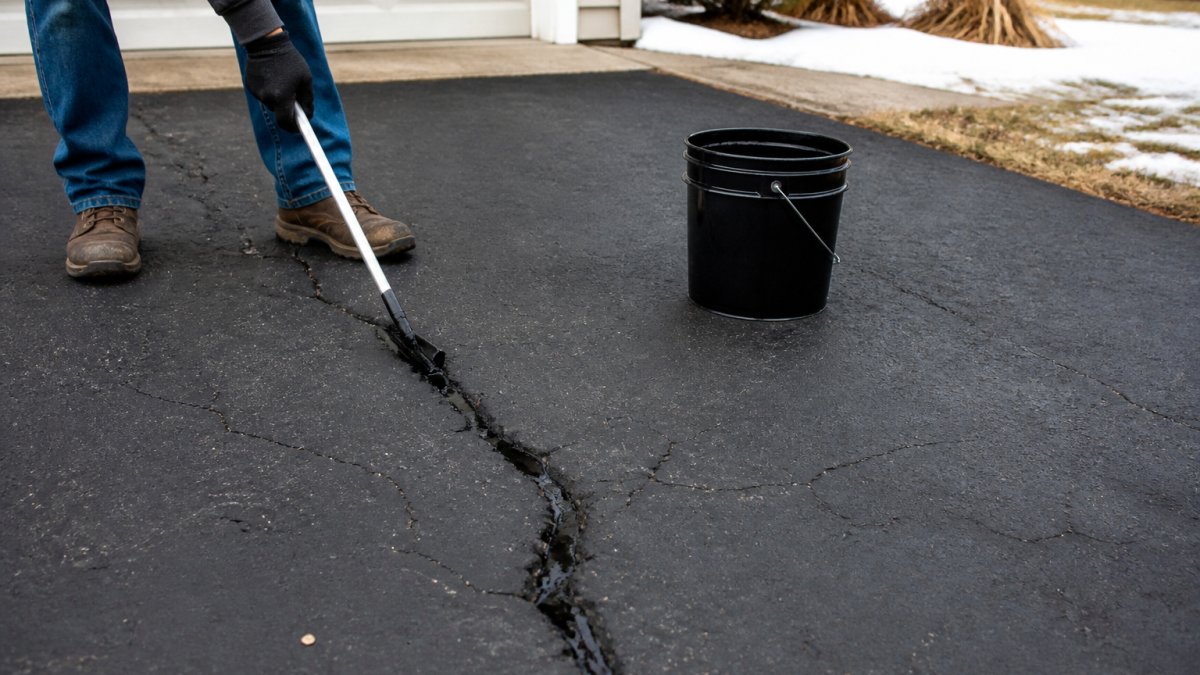
Crack sealing is the most important preventive step: it stops water from entering the pavement structure, and a properly sealed crack lasts 3-5 years.
This Old House
Sealant Types and Application Methods
Two main sealant types work well: hot-pour and cold-pour.
Hot-pour sealants heat to 300-350 degrees Fahrenheit, flow into cracks, and bond tightly as they cool.
Cold-pour sealants apply at room temperature, are cheaper and faster, but last only 2-3 years, best for small cracks and temporary fixes.
Application matters as much as material:
Clean the crack thoroughly (remove dirt, loose asphalt, and debris)
Dry the crack completely (water prevents bonding)
Apply sealant from bottom to top (forces air out, prevents air pockets)
Overfill slightly so the sealant sits above the crack surface
Smooth the surface so water runs off instead of pooling
Poor application wastes money: a dirty crack won't bond, air pockets leak, and thin sealant wears away in one season.
Asphalt Sealcoating as a Preventive Barrier
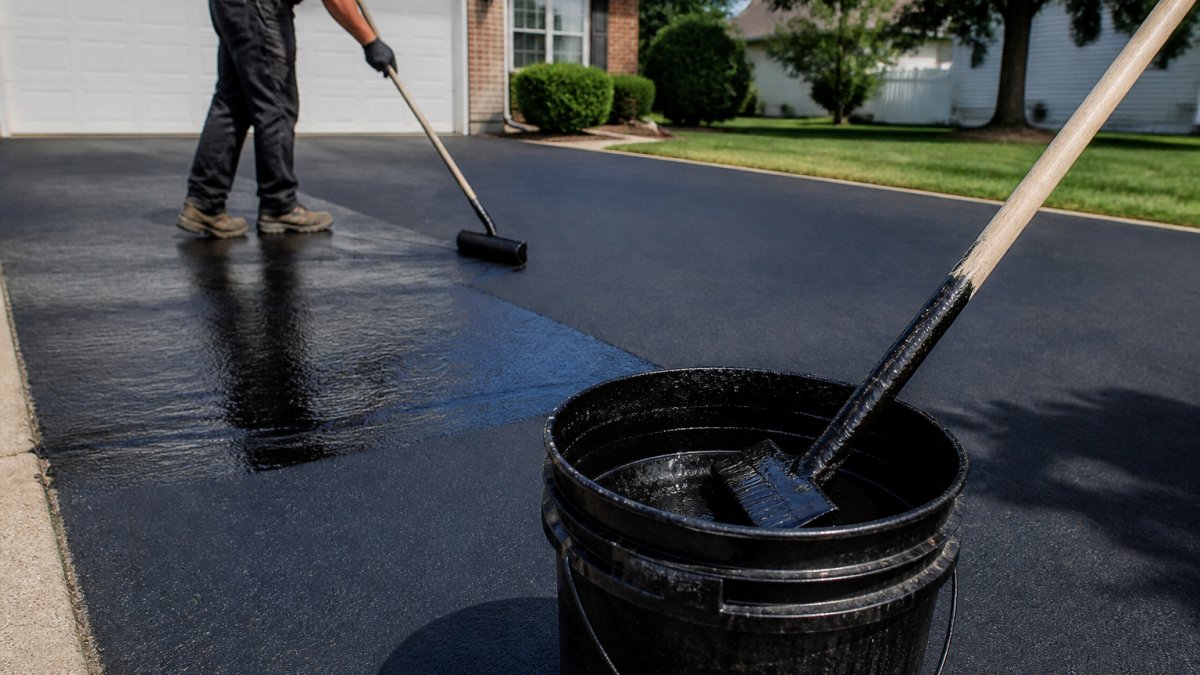
Sealcoating is a thin protective coating applied over the entire asphalt surface. It is not a structural fix and won't fill cracks or level depressions; it slows the two forces that age asphalt fastest, water soaking in and UV light breaking down the binder.
Think of it as a sacrificial layer. The sealcoat wears away so the asphalt underneath does not have to.
What Sealcoating Actually Does, and Does Not Do
It does:
Seal the microscopic surface porosity that lets water wick into the top layer
Restore the dark black color, which slows UV oxidation and heat absorption
Resist small fuel and oil drips that soften asphalt in parking stalls
It does not:
Bridge cracks wider than about 1/8 inch (those need crack sealing first)
Fix a failing base, soft spots, or alligator cracking
Add structural strength to a driveway carrying heavy loads
If you sealcoat over unsealed cracks, the coating bridges the gap, cures, and cracks again within a season. Crack sealing always comes first.
Timing, Coverage, and Cost Expectations
Sealcoat performs best in mild, dry weather. Most contractors schedule work when daytime temperatures stay above a certain threshold with no rain forecast for at least 24 hours, typically late spring and early fall.
Typical service intervals:
Residential driveways: every 2-3 years
Low-traffic parking lots: every 2-3 years
Higher-traffic commercial lots: every 1-2 years, and often only on the traffic lanes
Pricing varies by region, surface condition, and prep work, so get a written quote that itemizes prep separately from the coating.
Pro Tip Ask any contractor whether the quote includes crack sealing, edge trimming, and a second coat. A single thin coat over unprepared asphalt is the most common reason sealcoating fails early.
The Lifecycle Trade-Off
Sealcoating is a maintenance expense, not a repair. The math only works if you also handle cracks and drainage: a property that sealcoats every two years but never seals cracks will still develop potholes, because water enters through the cracks and attacks the base the coating never touches.
The order of operations that protects pavement longest is:
Fix drainage so water leaves the surface.
Seal cracks wider than 1/4 inch.
Sealcoat the intact surface.
Re-inspect every season and repeat.
Skipping step 1 or 2 makes step 3 largely cosmetic.
Surface-Specific Notes
Residential driveways: sealcoating is the highest-value preventive step after crack sealing, because driveways see light loads and the main threat is sun and water, not traffic.
Parking lots: sealcoat the drive aisles and stall areas where fuel drips and turning loads concentrate. Entrance aprons and dumpster pads take the most abuse and may need patching before coating.
Public roads and heavy-traffic surfaces: sealcoating is generally not the primary preventive tool. These surfaces rely more on crack sealing, drainage maintenance, and full-depth patching because traffic loads overwhelm a thin surface coating.
Asphalt Drainage Solutions to Eliminate Standing Water
Standing water is the root cause of most asphalt failure. Fix drainage first, then seal cracks and sealcoat.
Drainage Troubleshooting Checklist
Walk your property after heavy rain. Look for these drainage problems:
Check these areas:
Does water pool in the same spots every time it rains?
Are there low areas where the pavement dips?
Does water drain toward the building instead of away from it?
Quick fixes you can do yourself:
Clear debris from storm drains and gutters
Trim vegetation that blocks water flow
Redirect downspouts away from the pavement
Professional fixes we recommend:
Regrade the surface to improve slope (water should run off at 2-4% grade)
Install or repair catch basins to collect runoff
Add French drains or trench drains along problem areas
Poor drainage is the #1 reason asphalt fails early. Fixing it is essential to prevent asphalt potholes and extends pavement life by years.
Seasonal Prevention Schedule for Driveways and Parking Lots
A prevention calendar only works if it's tied to actual weather, not the month on the wall. This schedule separates tasks by surface type and gives escalation rules for when a small issue becomes a call-the-contractor issue.
How to Read This Schedule
Three triggers drive every task:
Rain: any week with more than about an inch of rainfall, or any single storm that leaves standing water for more than a few hours
Freezing: any stretch where overnight temperatures drop below 32 degrees Fahrenheit and daytime temperatures climb back above it, that is one freeze-thaw cycle, and a typical winter produces dozens
Traffic: the number and weight of vehicles crossing the surface each day
When a trigger fires, run the matching inspection. Do not wait for the season to change.
Spring (March-May): Damage Assessment and Sealing
Spring is when winter damage becomes visible: the ground is thawing, the base is saturated, and cracks that looked minor in fall are now open.
Driveways:
Walk the full length after the first heavy spring rain. Mark every crack wider than 1/4 inch.
Probe soft spots with a screwdriver. If it sinks easily, the base is compromised, that is a professional repair, not a DIY patch.
Seal all marked cracks before the next rain event.
Parking lots:
Inspect entrance aprons, dumpster pads, and drive aisles first. These fail before the rest of the lot.
Check catch basins and trench drains for winter debris.
Photograph and date any pothole, even a small one, so you can track whether it is growing.
Escalation rule: if you find more than three cracks wider than 1/4 inch in a single 100-foot section, or any alligator cracking, get a professional assessment before sealcoating.
Summer (June-August): Coating and Monitoring
Summer is the window for sealcoating and when heat stress shows up.
Driveways:
Sealcoat if it has been 2-3 years since the last application and all cracks are sealed.
Watch for new cracks appearing at the edges where the driveway meets the garage apron or the street.
Parking lots:
Sealcoat low-traffic areas. High-traffic lanes may need a shorter interval.
Re-stripe after sealcoat cures, not before.
Check for soft spots in stall areas, these often signal a failing base under a fuel or water leak.
Escalation rule: any depression that holds water after a summer storm needs drainage attention before fall. Water sitting on the surface in August becomes ice in January.
Fall (September-November): The Critical Window
Fall is the most important season for prevention. Everything you seal now is protected through the freeze-thaw cycle. Everything you leave open will be attacked all winter.
Driveways:
Clear leaves and debris from the entire surface and from any drainage swale.
Seal every crack wider than 1/4 inch. Do not wait for spring.
Redirect downspouts so they discharge at least several feet away from the pavement edge.
Parking lots:
Clean catch basins and storm drains before the first freeze.
Inspect the perimeter for edge crumbling, water runs off the edges and undermines them first.
Schedule any needed patching now, while hot-mix asphalt is still available in most markets. Cold-mix is a temporary fix and performs poorly through winter.
Watch Out Sealcoating in fall only works if temperatures stay warm enough for the coating to cure. If overnight temperatures are already dropping near freezing, postpone sealcoating to spring and focus on crack sealing instead. Crack sealant cures faster and tolerates cold better than sealcoat.
Winter (December-February): Protect and Document
Winter is not a repair season. It is a documentation season.
Driveways and parking lots:
Do not sealcoat. Curing will fail.
Do not attempt permanent patching in freezing weather. Cold-mix patches placed below freezing often pop out within weeks.
Mark any pothole or hazard with cones, reflective tape, or temporary barricades so vehicles avoid it and the damage does not spread.
Escalation rule: if a pothole appears in a traffic lane and cannot be safely avoided, treat it as a safety hazard. Limit access to that area or arrange a temporary cold-mix patch until permanent repair is possible.
Surface-Specific Priority Order
Not every surface deserves the same attention. Spend your maintenance budget in this order:
Surface | Highest-priority task | Why |
Residential driveway | Fall crack sealing | Light loads mean cracks are the main water entry point |
Low-traffic parking lot | Drainage clearing | Water pools in low spots and stalls |
High-traffic commercial lot | Entrance apron and drive aisle patching | Heavy turning loads break down edges first |
Public road shoulder | Edge repair | Runoff undermines the edge before the center fails |
A Simple Tracking Method
Keep a one-page log per surface: date, weather trigger (rain, freeze, or both), what you found, and what you did.
Most property owners find that a few hours per season, spent in the right order, prevents the majority of potholes.
When to Call a Professional vs. DIY Maintenance
Some maintenance you can handle. Some jobs need professional equipment and expertise.
DIY tasks (safe and effective):
Clearing debris and vegetation
Filling low spots with gravel
Documenting cracks and damage
Call a professional for:
Crack sealing (requires proper equipment and materials)
Sealcoating (needs specialized spray equipment and expertise)
Pothole repair (requires compaction equipment and hot asphalt)
Professional crack sealing and sealcoating take skill, and improper application wastes money and fails quickly.
Protecting your asphalt from potholes starts with understanding what causes them: water infiltration, freeze-thaw damage, and traffic stress.
Frequently Asked Questions
What causes potholes to form in asphalt?
Potholes form when water infiltrates cracks and seeps into the base layer beneath the asphalt pavement. Freeze-thaw cycles expand and contract this moisture, weakening the subgrade. Traffic loads then break away chunks of pavement, creating the characteristic hole. Poor drainage and standing water accelerate this process, especially during heavy rainfall and winter months.
Does sealcoating prevent potholes from forming?
Asphalt sealcoating acts as a protective barrier that reduces water infiltration into the pavement structure. By blocking moisture from reaching the base layer, sealcoating slows the freeze-thaw damage cycle and extends pavement lifespan. Combined with crack sealing and proper drainage, sealcoating is a key part of pothole prevention, though it works best on pavement that is already in good condition.
How often should asphalt be inspected for cracks?
Inspect asphalt at least twice per year, in spring after winter freeze-thaw cycles and in fall before cold weather returns. In high-traffic areas or climates with heavy rainfall, quarterly inspections catch early cracks before they spread. Look for alligator cracking, linear cracks, and areas where water pools. Early intervention through crack sealing prevents small damage from becoming potholes.
Can standing water cause potholes in a parking lot?
Yes. Standing water allows moisture to seep into cracks and the pavement structure below. When temperatures drop, this water freezes and expands, pushing up on the asphalt and creating stress. As traffic passes over weakened areas, chunks break away and potholes form. Proper surface grading and drainage systems direct runoff away from the pavement, preventing water pooling and reducing pothole risk significantly.
GET A FREE ESTIMATE

Comments